






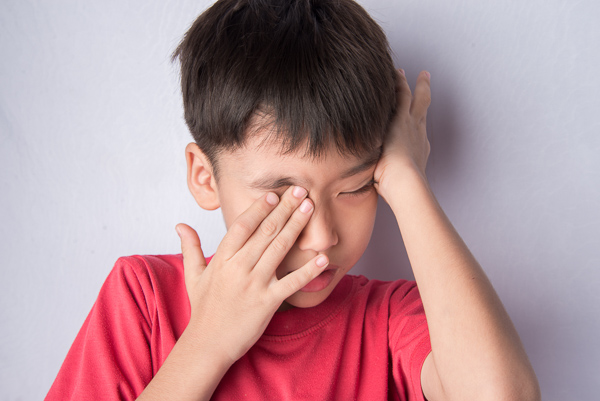
As we get older, we expect that our eyesight could start to decline, but what if your child was diagnosed with a vision problem?
Myopia, sometimes known as short-sightedness or near-sightedness, is a common condition that causes blurred distance vision. It usually starts during childhood and typically progresses until the child stops growing.
It might be surprising to know that, in terms of younger Australians, myopia was the second most commonly reported long-term condition, preceded only by allergic rhinitis (hay fever).[1]
If you’re thinking this is news to you, you’re not alone. a recent survey[2] conducted by CooperVision Australia and New Zealand shows that 62% of NSW and ACT parents with children aged 17 years and younger do not know what myopia is, and only 12% recognise the health risk that their children might develop later in life.
It’s important for parents to understand what can influence the development of myopia because, if current global prevalence rates don’t change, it is estimated that by 2050, more than 50% of the world’s population will have myopia and 10% will have high myopia.[3] That is an increase from 2010, when 27% of the world’s population were estimated to have myopia and 2.8% were estimated to have high myopia.[4]
One reason for the increase in prevalence of high myopia is that the onset of myopia is occurring earlier in life. In 1983, the typical onset of myopia was at around 11 years of age. However in 2000, the average onset of myopia was just 8 years of age.[5] Reducing the prevalence and impact of myopia and understanding the influencing factors is critical.
How do I know if my child is at risk?
Myopia is a common eye condition that causes blurred distance vision and usually starts during childhood and typically progresses until the child stops growing. There are two main risk factors which can mean your child is more at risk of developing myopia: lifestyle and family history.
Lifestyle – modern lifestyles may influence the development of myopia. These include:
- Low levels of outdoor activity[6]and associated factors including:
- Low levels of light exposure[7]
- Prolonged near tasks such as reading.[8]
Family history – The likelihood of developing myopia, particularly high myopia increases when one or both parents are myopic.[9] However, the exact link between a family history of myopia and development of childhood myopia remains uncertain.[10]
What can I do?
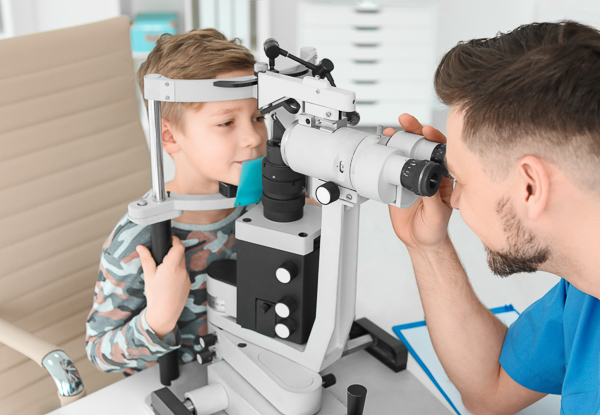
The first step is to have your child’s eyes examined by an Optometrist. If your child is diagnosed with myopia, it is important that you talk with your Optometrist about, not only correcting the immediate sight issue, but importantly what can be done to slow progression of myopia, with the aim of preventing it from developing into high myopia in the future.
For further information about myopia, talk with your Optometrist. Additional useful information about child myopia can be found at www.childmyopia.com
[1]Australian Institute of Health and Welfare 2016. Australia’s health 2016. Australia’s health series no. 15. Cat.no.AUS 199. Canberra: AIHW. Adults stats section 3.15 ph 117. Child stats section 5.4, pg 3.
[2]CooperVision Australia and New Zealand: Child Myopia in Australia – consumer perceptions survey. Conducted by YouGovGalaxy August/September 2018. The sample comprised 1,003 Australian parents of children at home aged 0-18 years.
[3]The impact of myopia and high myopia: Report of the Joint World Health Organization – Brien Holden Vision Institute Global Scientific Meeting on Myopia. University of New South Wales, Sydney, Australia. 16-18 March 2015.
[4]ibid.
[5]Lin LL, Shih YF, Hsiao CK et al. Prevalence of Myopia in Taiwanese School Children: 1983 to 2000. Ann Acad Med Singapore. 2004; 33:27-33
[6]He M, Xiang F, Zeng Y et al. Effect of Time Spent Outdoors at School on the Development of Myopia Among Children in China: A Randomized Clinical Trial. JAMA 2015; 314:1142-1148
[7]Read SA, Collins MJ, Vincent SJ. Light Exposure and Eye Growth in Childhood. Investigative Ophthalmology and Visual Science 2015: 56(11):6779-6787
[8]Ip JM, Saw SM, Rose KA, Morgan IG, Kifley A, Wang JJ, Mitchell P. Role of Near Work in Myopia: Findings in a Sample of Australian School Children. Investigative Ophthalmology and Visual Science 2008:49(7):2903-2910
[9]Lim LT, Gong Y, Ah-Kee EY, Xiao G, Zhang X. Impact of parental history of myopia on the development of myopia in mainland China school-aged children. Ophthalmology and Eye Disease. 2014;6:31-5
[10]Ip J, Huynh S, Robaei D, Rose K, Morgan I, Smith W, Kifley A, Mitchell P. Ethnic differences in the impact of parental myopia: Findings from a population-based study of 12-year old Australian children. Investigative Ophthalmology and Visual Science 2007: 48: 2520 – 2528.